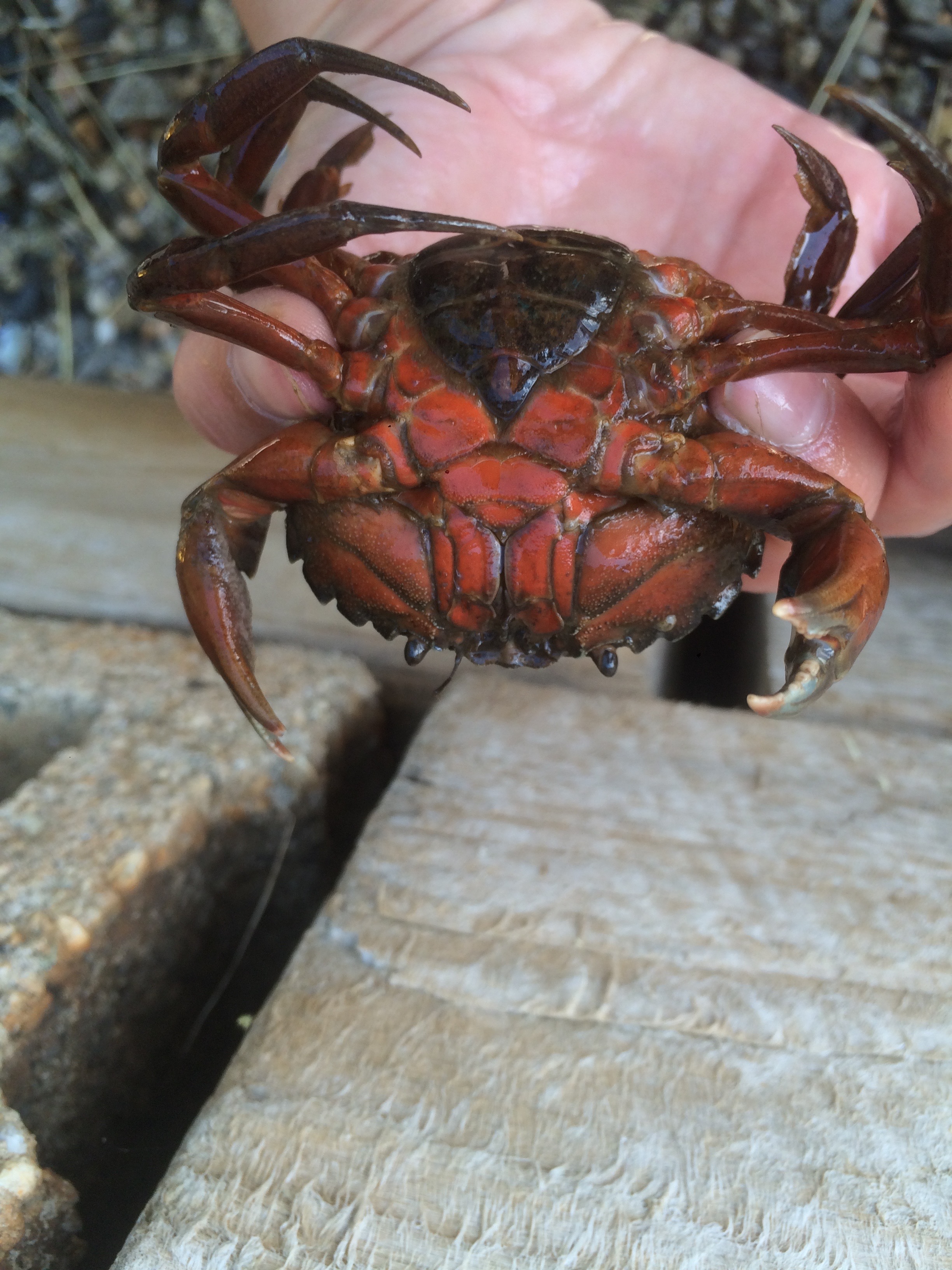
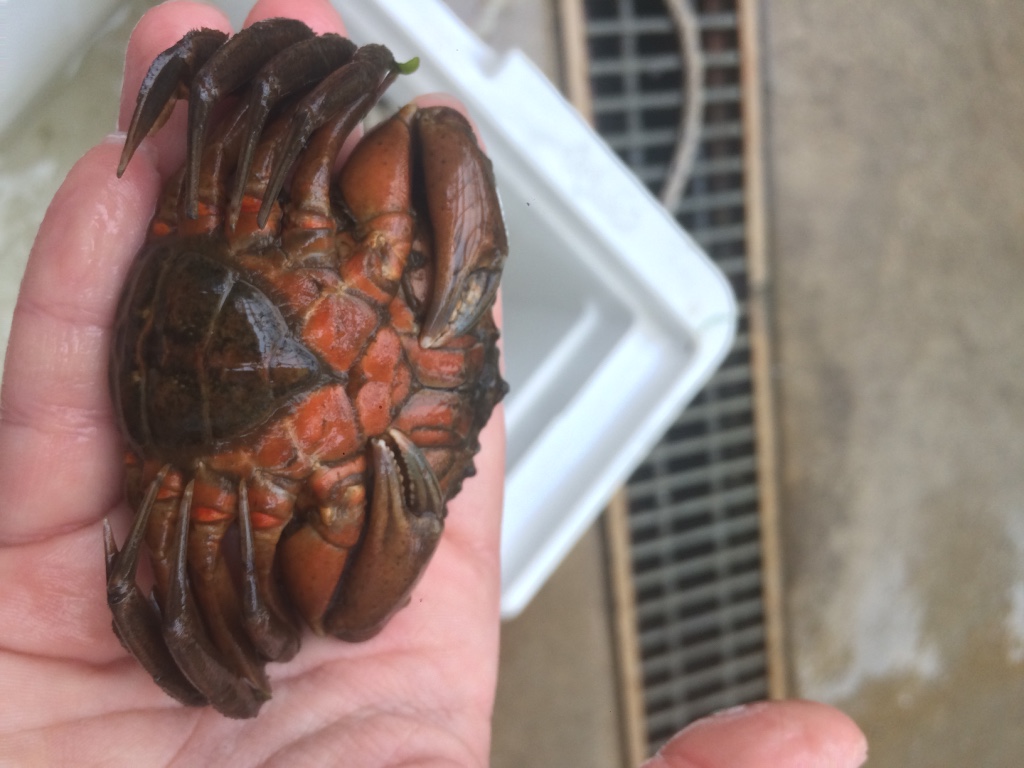
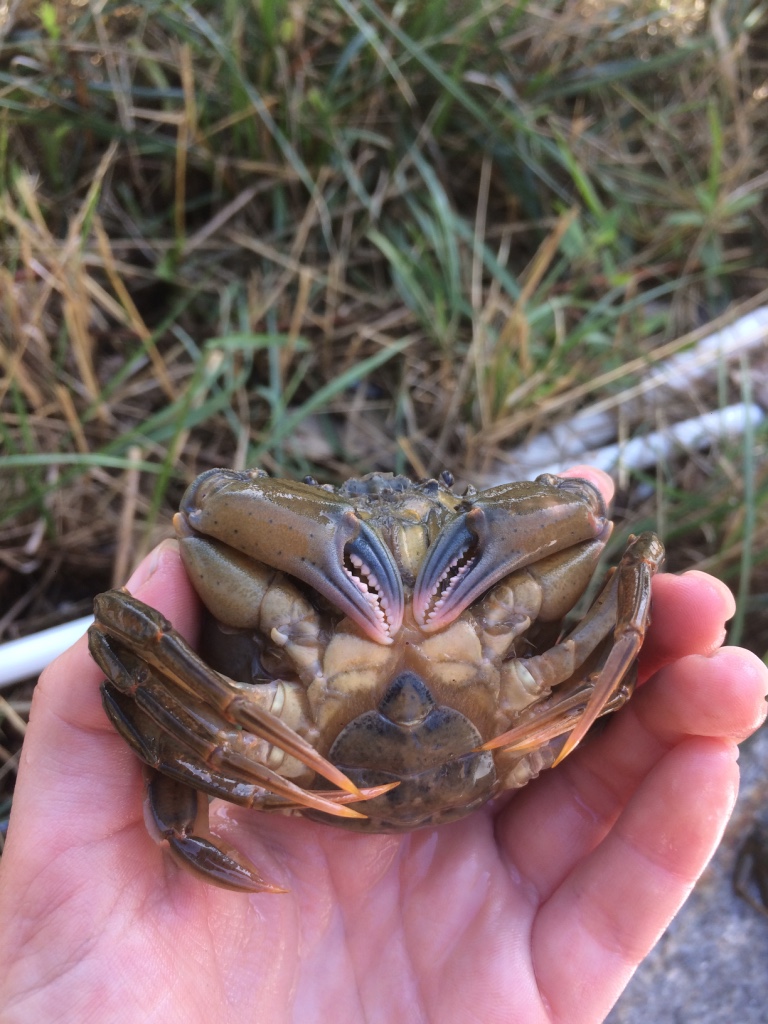
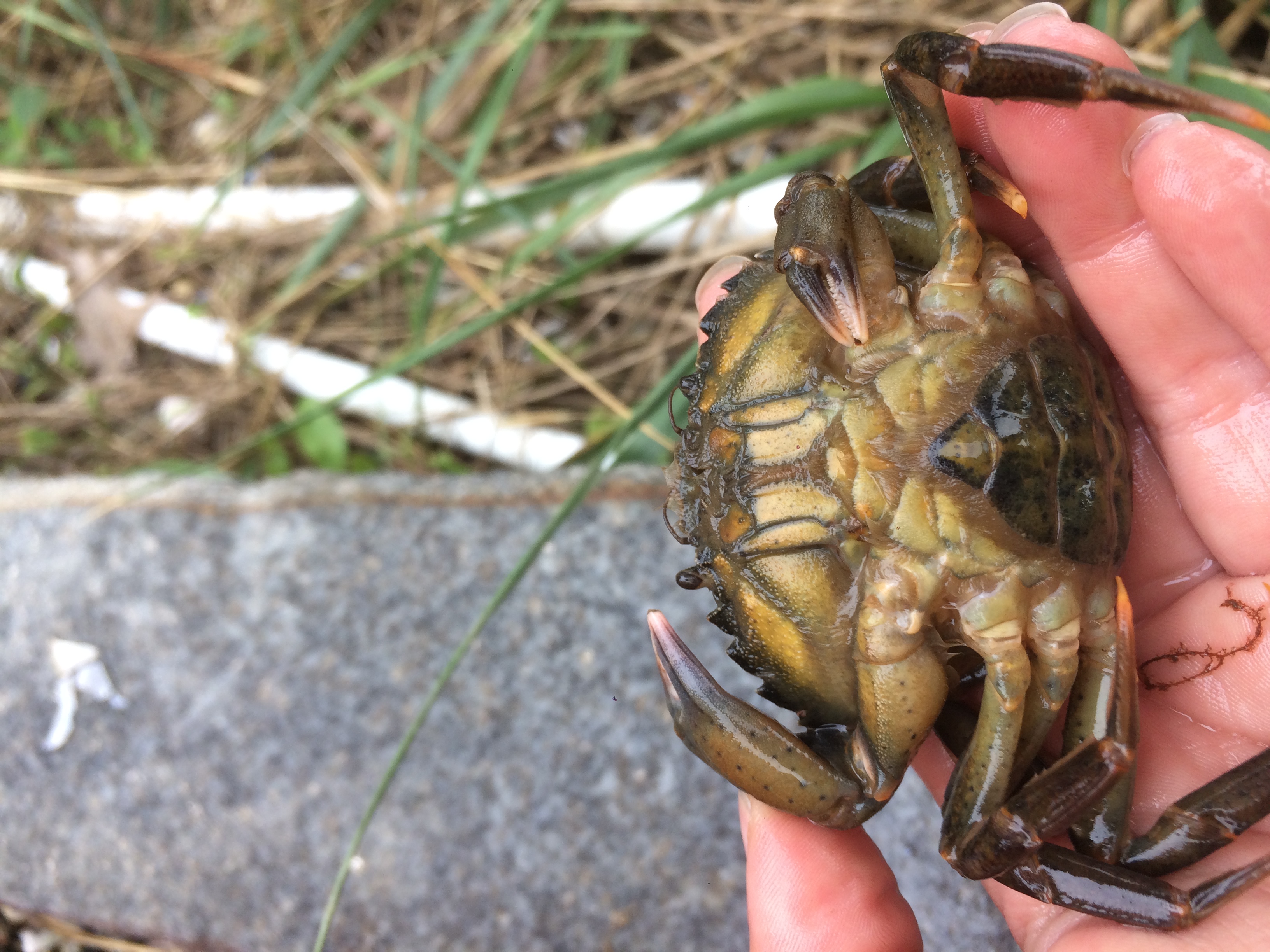
Side split
Check the side edge of the carapace for a visible seam or opening. A more obvious split can indicate the crab is close to molt.
This page will hold molt-phase sketches, visual cues, and field notes for training new green crab harvest workers.
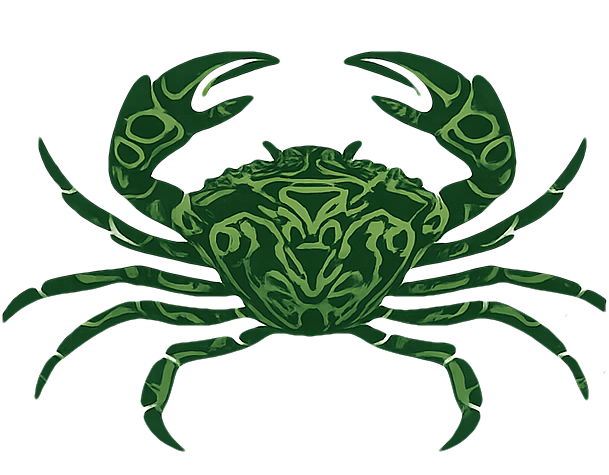
These sketches are training aids for human review. Look for several cues together, then compare your read with MoltMeter and known molt timing examples.
Check the side edge of the carapace for a visible seam or opening. A more obvious split can indicate the crab is close to molt.
Look around leg joints and limb bases for pale rings or halos. The cue is easiest to see in good light and close views.
As molt approaches, shell and limbs may look duller, milkier, or less translucent. Compare against crabs from the same light and tank.
Examples copied from the local training dataset. Captions show source crab/date context where available.